
Saginaw Township City Directory Collections
Saginaw Township has no single township-wide historical directory. The strongest shelf is Hoyt Library’s Saginaw collection, which can include township listings in some volumes. Hoyt describes a run from 1866 to the present, while the archive finding aid for collection COL-DIR-SAG-001 describes 80 volumes with metadata dated 1886 to 2024. Those statements are both useful, but neither proves that every intervening year or township street appears. Start by identifying the exact volume, then check the title, publication year, city label, and page.
| Collection | Years | Where Held | Access |
|---|---|---|---|
| Hoyt historical directory collection | 1866 to present, per Hoyt | Hoyt Library Local History and Genealogy | Library use only; copying depends on condition and rights |
| COL-DIR-SAG-001 finding aid | Metadata: 1886 to 2024, 80 volumes | Hoyt Library archive catalog | Search collection by query or year range, then verify the volume |
| Polk and other historic volumes | Late nineteenth century onward, run varies | Hoyt and Library of Michigan holdings | Library shelves, microfilm, or licensed research routes |
| Bresser or criss-cross directories | Especially associated with late 1960s onward | Directory holdings, volume by volume | Address-oriented research; local completeness must be checked |
The older titles can use East Saginaw, Saginaw City, or Saginaw instead of a modern place label. That matters for a Saginaw Township historical-collection search because the library holdings are regional, not proof that a volume covers every township address.
See the archive finding aid before a visit. Its collection search is the fastest way to narrow a surname or a possible publication year.
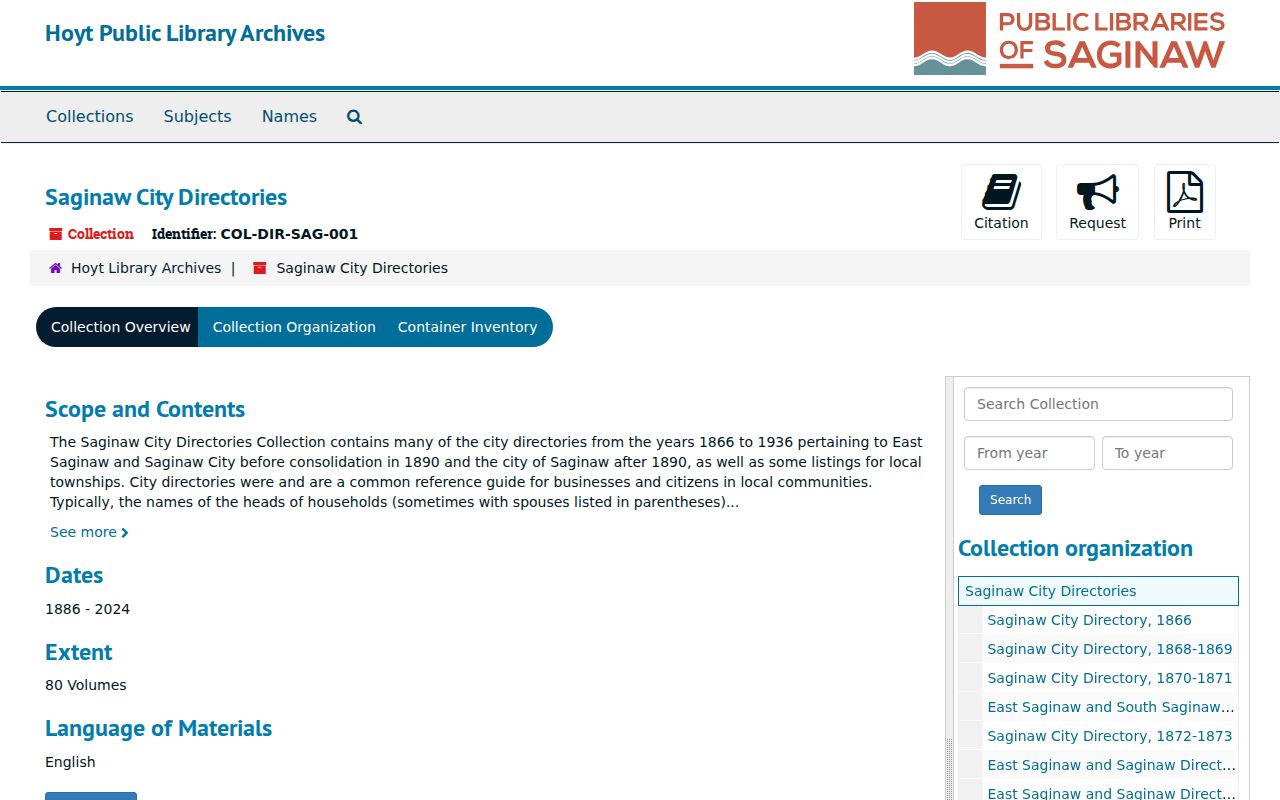
The finding aid confirms a catalog path, but a volume and page still need direct inspection before they support a household conclusion.
Saginaw Township Directory Years at Hoyt
Hoyt Library’s Local History and Genealogy department is the practical starting point for Saginaw Township directory work. Its holdings also include newspapers on microfilm, a county biography index, obituary and cemetery resources, oral histories, school and church histories, atlases, plat books, census material, and family papers. The department is at 505 Janes Avenue in Saginaw. Materials are library-use-only, are not sent through interlibrary loan, and may have copying limits because of condition or rights. A distant researcher can ask by phone, email, or writing for a volume, collection, box, or page lead.
The Hoyt Local History and Genealogy department describes these holdings and its inquiry channels.
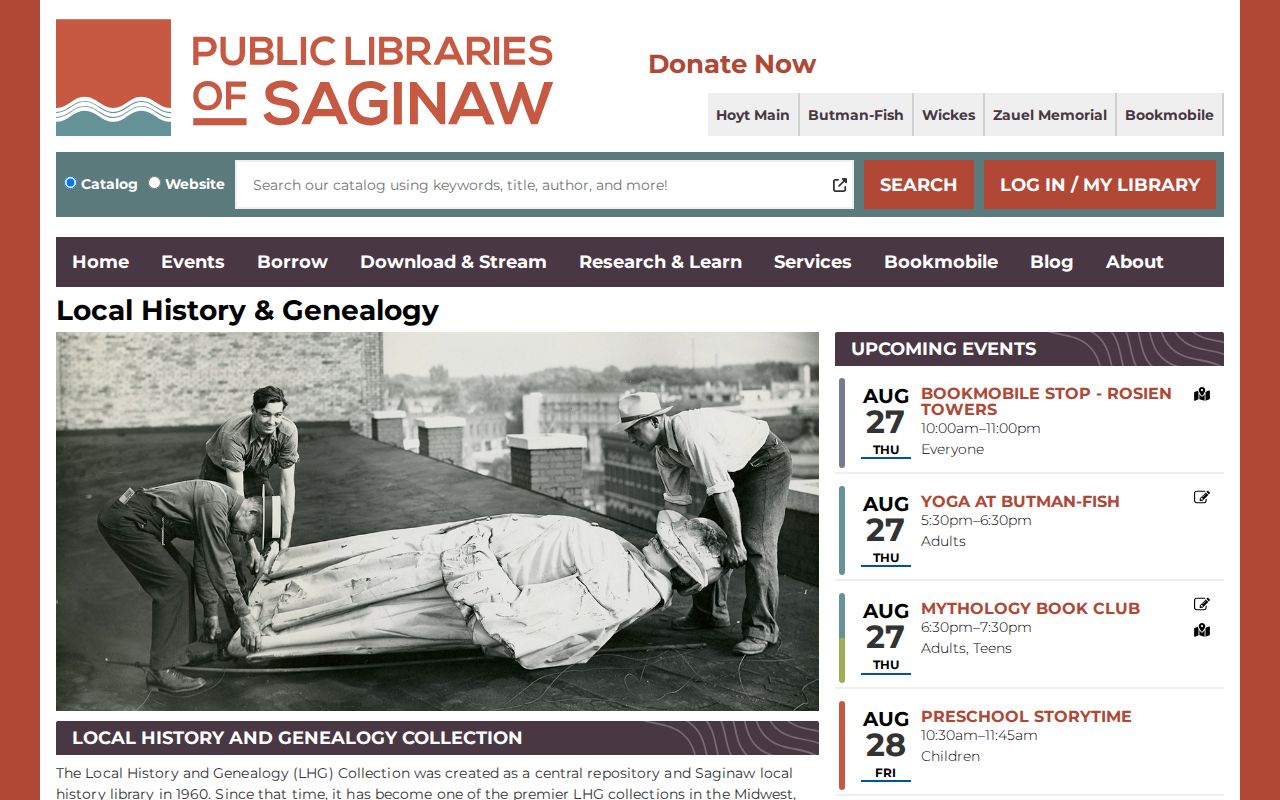
Use the staff contact to ask whether a particular directory year, microfilm reel, or companion collection can be consulted before making a trip.
Hoyt reports more than 20,000 books, microforms, and periodicals in the department. That broad shelf is useful when a person vanishes from one directory year: an obituary, newspaper notice, cemetery reading, or local history file may supply a dated next step.
Note: A directory entry is a dated publication record, not proof of a person’s current address.
Read a Saginaw Township City Directory Entry
A published directory entry usually gives a compact snapshot. The Saginaw collection’s finding aid says entries can include heads of household, a spouse in parentheses, street address, occupation, advertisements, agencies, schools, and benevolent societies. The exact abbreviation key was not captured from a Saginaw volume, so do not assign a local meaning to a mark without photographing or reading that volume’s key. A good transcription keeps the name exactly as printed, including initials and spacing, then records the volume year and page.
| Name | Usually a head of household or named person; retain initials, spelling, and spacing. |
|---|---|
| Spouse reference | May appear in parentheses and can help separate same-name people. |
| Address | Street and house number in the publication year, useful as a dated location clue. |
| Occupation | May identify work or an organization, but wording and detail vary by volume. |
| Street-order material | Polk or reverse-directory sections may list houses by street and number. |
- Criss-cross directory
- An address-first directory section that arranges streets and house numbers to help identify a listed head of household.
- Householder index
- A name-oriented list that generally centers the head of a household rather than every occupant.
- Abbreviation key
- The volume’s own explanation of shortened terms and symbols. Read it before expanding an entry.
Compare the printed street with a plat, parcel description, or adjacent street if a modern search fails. The city and township labels, plus a street’s later form, can change while the historical entry remains unchanged.
Saginaw Township Polk and Bresser Paths
The Library of Michigan’s directory guide describes why publisher style changes the search method. Polk directories can be approached by surname, street, phone number, or a classified buyer’s guide. Their street order is alphabetical by street and then house number. Bresser, also called criss-cross, is especially useful when an old address is already known: it arranges streets and house numbers and can identify a listed head of household, phone clue, or owner and occupant status in some runs. Bresser material is especially associated with the late 1960s onward, while Polk stretches back to the late nineteenth century.
The Library of Michigan city-directory guide explains the publisher and shelf routes.
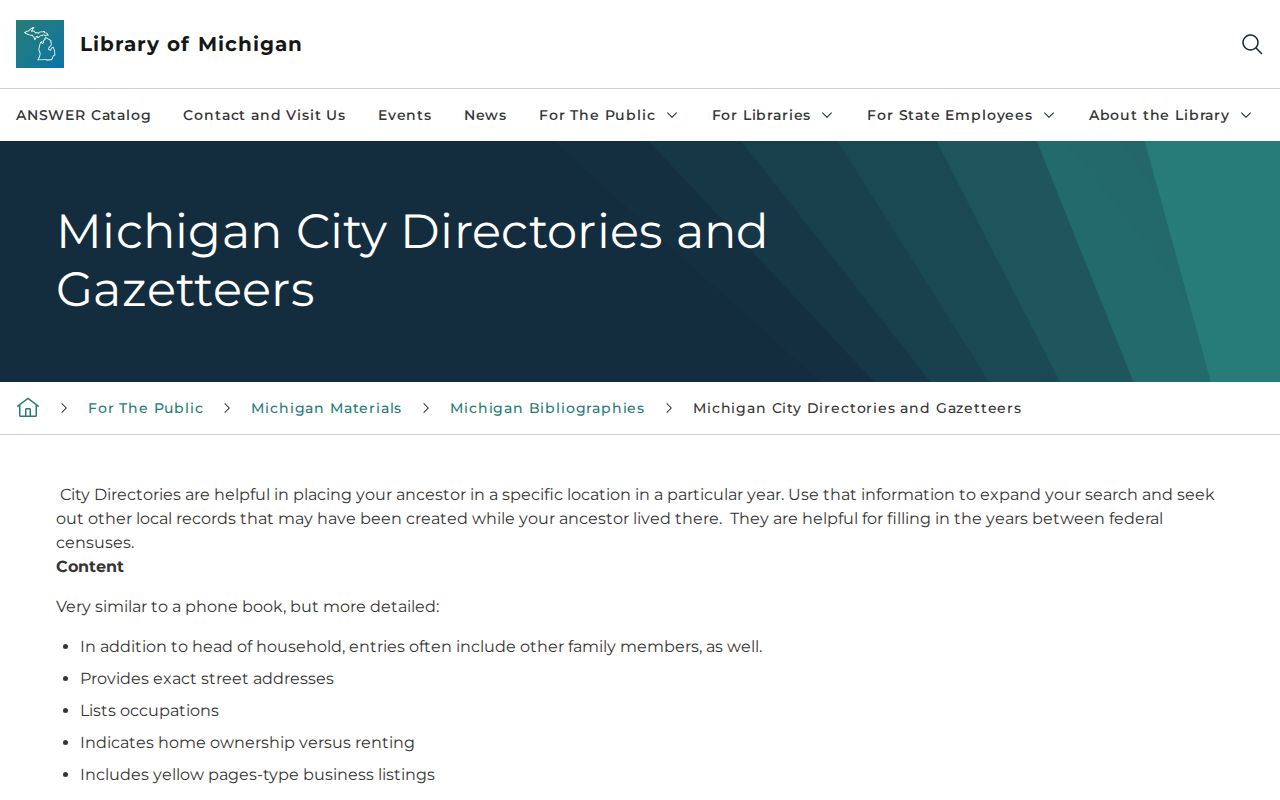
The guide also names other publishers, so the title page is important when a familiar search pattern does not fit a volume.
Neither a Polk entry nor a Bresser listing is a full household roster. They work best as one dated clue paired with a census year, newspaper notice, deed, or obituary. For a current address-based record chain, use the Saginaw Township street directory route instead of treating a historical book as a current roll.
East Saginaw Names in City Directories
Old local labels can make a valid Saginaw Township historical-directory lead appear to be missing. The Hoyt finding aid describes many East Saginaw and Saginaw City volumes before consolidation in 1890, then Saginaw material after 1890. Search each historical city name shown in the catalog and title, rather than applying only a current place term. The Archives of Michigan guide also organizes many older records by township, county, and record series, which can differ from a present-day street label.
This naming bridge is a local records story, not a claim that every East Saginaw address was in Saginaw Township. Match the street, adjacent roads, parcel or plat detail, and year before assigning a historical entry to the township. Federal census access follows a 72-year rule, so it can serve as a dated comparison only where the released schedule is available.
Note: A city-name change is a search issue, not evidence that a family moved.
Search an 1889 Saginaw City Directory
A remote lead is available through Google Books, which hosts an 1889 Saginaw volume from the New York Public Library. The visible material shows Saginaw streets, names, occupations and abbreviations, and Polk & Co. publishing information. It is useful for testing a name spelling or seeing the format of an old entry. The research capture did not verify full-page access or complete township coverage, so snippets should be treated as leads to compare with the physical or archival collection.
Open the digitized 1889 Saginaw directory for the available online material.
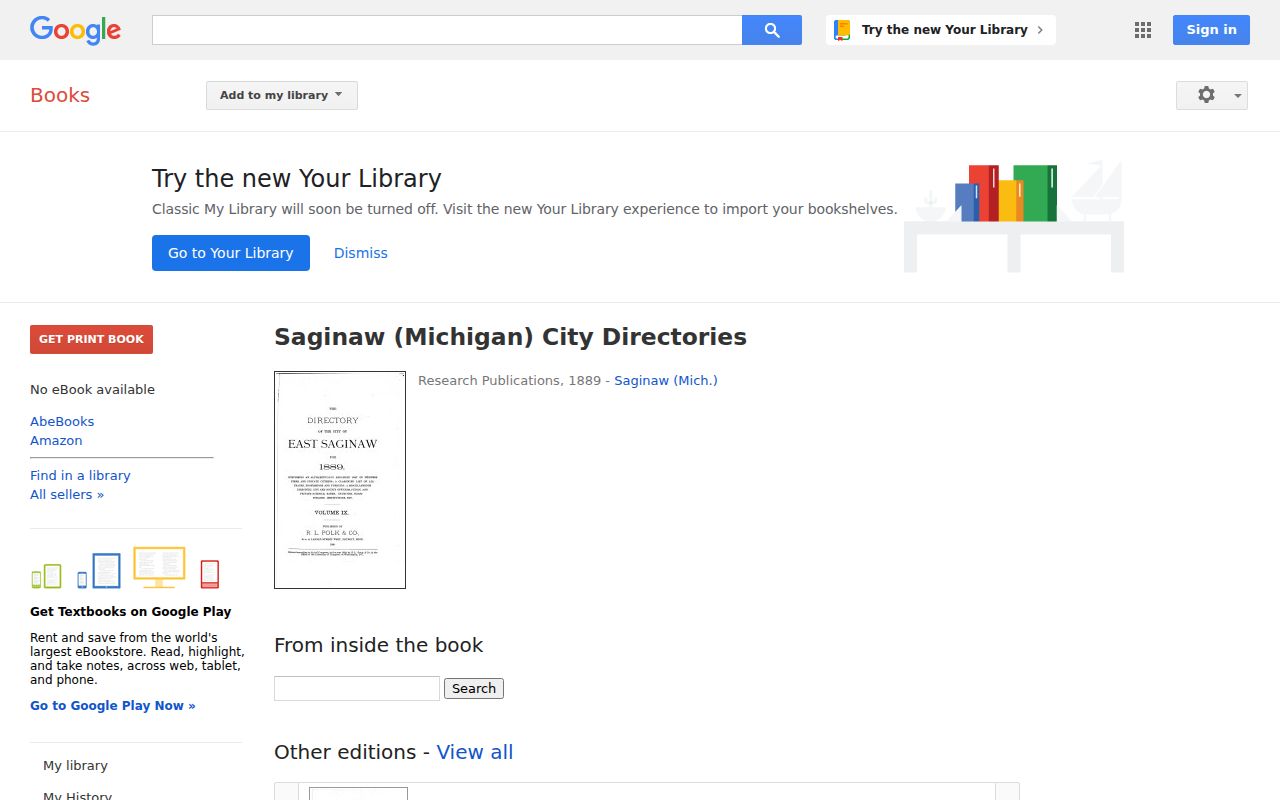
The digitized sample is best used to capture a spelling, year, street, or occupation for a follow-up search at Hoyt.
Saginaw Township Obituary and Newspaper Leads
When a household no longer appears in a directory, Hoyt’s other local tools can help date the change. The library reports Saginaw newspapers on microfilm from 1853 to the present and an obituary index with more than 250,000 Saginaw News entries. The index has basic name searching, advanced fields, and visible record labels for newspaper, date, page, spouse, cemetery, and funeral home. Those fields can distinguish two residents with a similar name and help select the next directory year to inspect.
The Hoyt databases list links the obituary, directory, image, and genealogy resources.
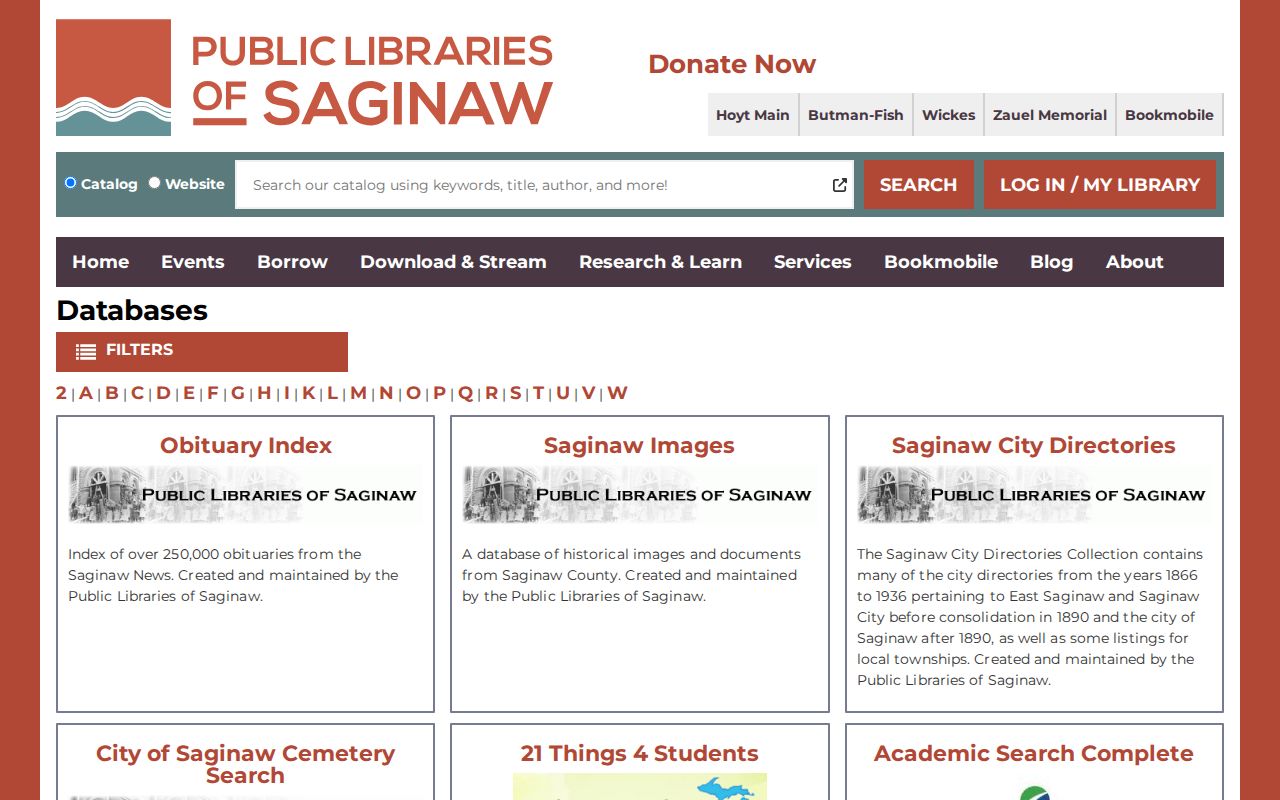
An obituary index is a finding tool. Confirm any family relationship or address against the newspaper item, a directory page, or the relevant custodian record.
Trace Families with Saginaw Township City Directories
Use these volumes as annual or near-annual snapshots, not as a single answer about a family. The most reliable sequence starts with a known person and a narrow year range. Preserve the name as printed, then follow the address, spouse reference, and occupation only when the next volume supports the connection. Pairing a directory year with a released federal census year can show whether a household pattern persists between decennial counts. A move, death, name change, or a volume’s incomplete coverage can all explain a disappearance.
- Find the person in the nearest known directory year and record the exact title, year, page, spelling, and address.
- Search the earlier and later volumes for the same name, initials, spouse reference, street, and occupation.
- Check the Polk street order or a Bresser-style section when the address is more reliable than the surname.
- Compare the dated directory sequence with an available census year, newspaper notice, obituary, cemetery clue, or probate index.
- Ask Hoyt staff or the archive about a missing volume, alternative city label, or a related family-paper collection.
For older estates, the Archives of Michigan Saginaw County guide lists probate files from 1837 to 1968 and index cards from 1837 to 1991. That record group can support an heir trail after a directory lead, although a specific party or case is needed for a probate request.
Note: Record each source date because a directory, census, and obituary can describe different points in a person’s life.
Saginaw Township Directory Archive Contacts
Hoyt is the primary directory desk, while the Castle Museum and Saginaw Historical Society provide county-history context. The museum is at 500 Federal Avenue in Saginaw and identifies its role as preserving and presenting the county story. The public page lists hours and admission information, but the research did not locate a detailed name index, research-service inventory, or reproduction policy. Contact the museum directly about a specific local-history question rather than assuming a person is indexed there.
The Castle Museum and Historical Society of Saginaw County provides its public visit information.
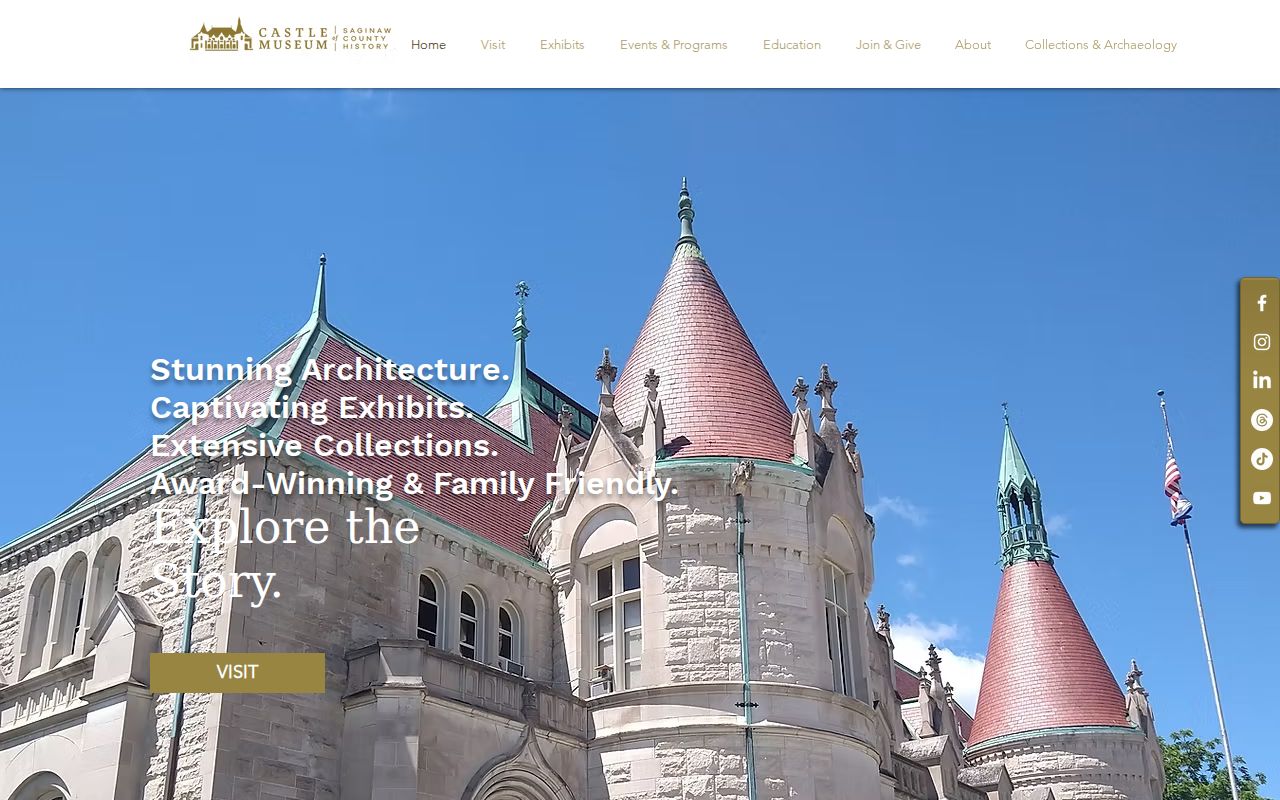
The museum is a complementary history source; Hoyt and its archive catalog remain the main places to verify a directory volume and page.